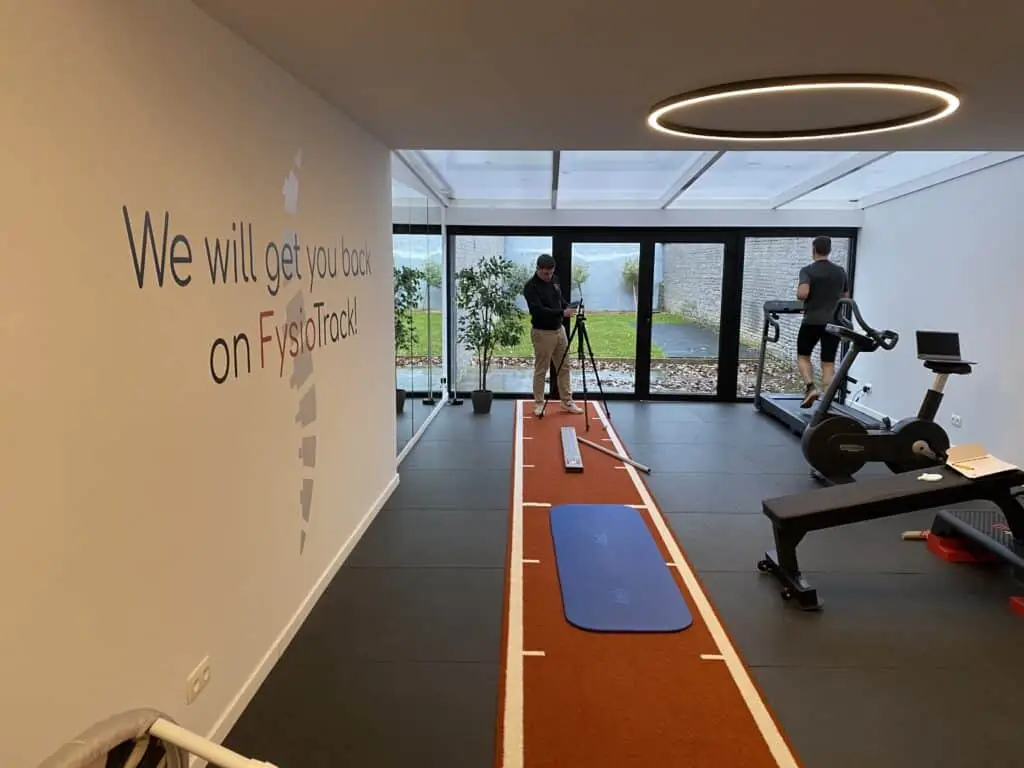
Anterior knee pain is a common issue among hockey players, and it can be difficult to eliminate completely. The recurring nature of this injury can be detrimental to a player’s sports participation and performance, making it essential to root out the underlying cause. In order to address this issue, Sport physio Jason of Fysiotrack (Belgium) performed an initial running assessment on a hockey player with anterior knee pain to establish a benchmark and identify potential factors contributing to the pain.

The assessment revealed a weakness in the impact loading on the body during the running test. Specifically, the “impact duration” parameter, which measures how quickly the impact travels through the legs, scored poorly. This can indicate poor active absorption of impact by the muscles and tendons, leading to overload on the passive system, such as joints and bones. This can explain the recurrent anterior knee pain.
"Runeasi assists us in determining which exercises are essential for rehabilitation" - Jason Coldwell
To address this issue, Jason and the hockey player implemented a training plan that included more plyometric and change of direction exercises. Plyometric exercises are exercises that involve explosive movements, such as jumping and bounding, which are designed to quickly activate the muscles before impact. Change of direction exercises, on the other hand, involve quick movements in different directions, such as agility drills, which are used to improve the ability to absorb impact during sudden changes in direction. These exercises are ideal for improving the values on impact duration, which will help to reduce the overload on the joints and bones.

During this training process, the player reported a decrease in knee pain and after more than 2 months of hard labor, it was time for a follow-up test to see if they had made progress in the ability to absorb the impact. The results were astonishing. The Runeasi running quality improved from 58% to 74%. This demonstrates the effectiveness of neuromuscular training in improving intra- and inter-muscular coordination and the ability to absorb impact during running.
It is worth mentioning that neuromuscular training effects can happen quite fast (+-2-4 weeks) and it is important to keep monitoring the progress to ensure that the player is making progress, and if not, adapt the training accordingly. It is also important to remember that anterior knee pain can have multiple causes, and it is essential to get a proper diagnosis before attempting to address the issue. With the right diagnosis and treatment plan, hockey players can reduce their risk of recurrent anterior knee pain and improve their sports participation and performance.
Case insight provided by: Jason Coldwell
Jason Coldwell, a sports physiotherapist since 2018, has a 'can do' mentality and is always looking to improve himself and his environment. This is exemplified by the establishment of his own practice, FysioTrack, in 2020 where he helps individuals with their physical rehabilitation and achieving specific goals. In 2021, the practice also began utilizing Runeasi for screenings and optimizing running analysis.