
What makes the elite runners elite? (Part 1)

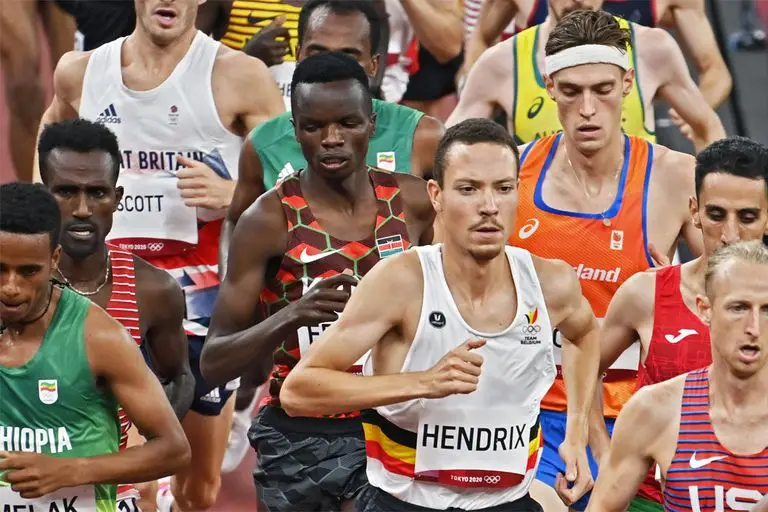
© Photo News
Do you ever wonder what makes elite runners like Usain Bolt and Eliud Kipchoge so extraordinary? Sure, their physiological qualities play a major role, but it’s also their effortless, smooth-running technique that allows them to break records and achieve historic world performances. In this post, we will compare the running biomechanics data of three elite and three recreational runners at various running speeds.

Comparing runeasi running quality
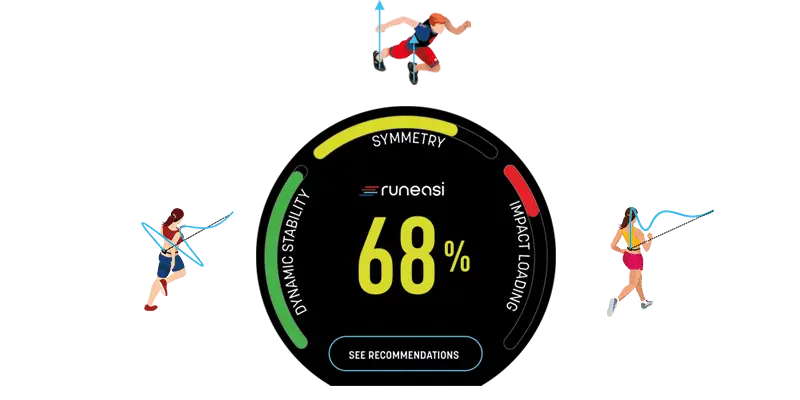
‘Runeasi Running Quality’ is an overall score from 0 to 100 that captures the overall movement quality during running. It is assessed using a running gait analysis at one or more speeds. It is based on three crucial biomechanical components: dynamic stability, impact loading, and symmetry. These objective measures are linked to both running injury risk and biomechanical performance (Schütte et al. 2017; Pla et al. 2021; Melo et al. 2020; Johnson et al. 2020).

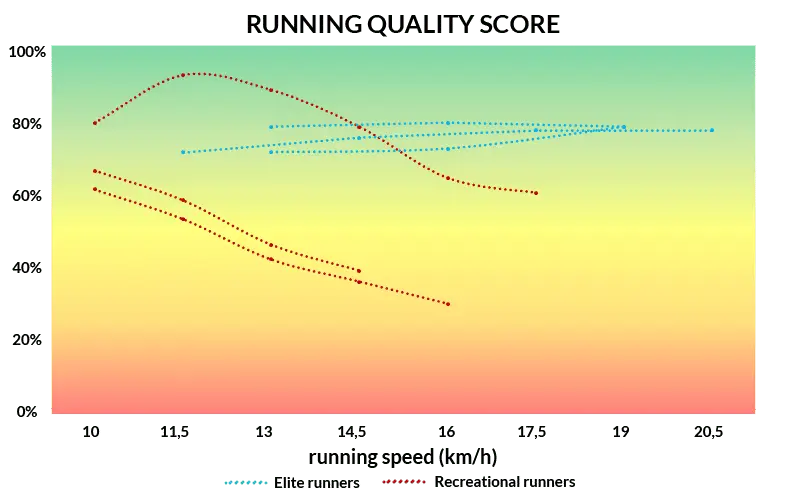
When we dive deeper into the above graph, it is clear that there is a distinct difference in performance between elite and recreational runners. The elite runners demonstrate an improvement in running quality as the speed increases, while two of the recreational runners show a decline in running quality with increasing speeds. Only one recreational runner is able to maintain his running quality from 10 to 14 km/h and has the highest running quality score at 13km/h among all runners. This is not surprising as elite runners are typically accustomed to running at higher speeds, while the recreational runner may have honed his technique at this specific speed. Beyond 14,5km/h, a clear distinction can be seen between the recreational runner and the elite runners.

Dynamic stability, a major discriminating factor
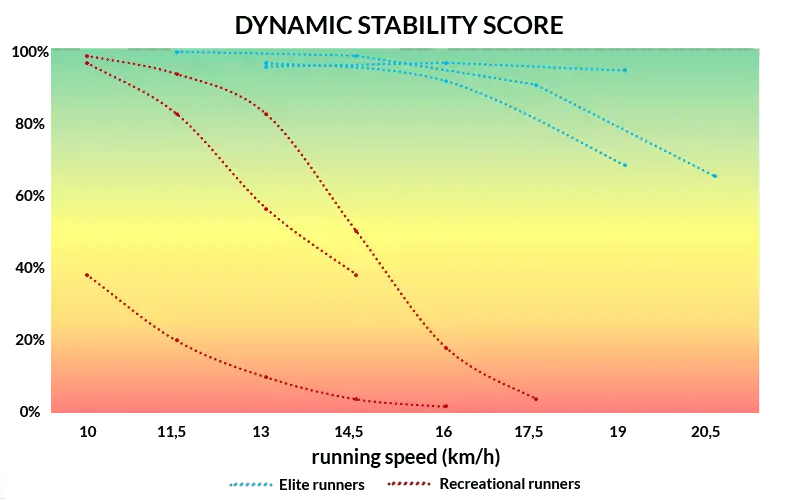
It is apparent that elite runners exhibit superior running quality performance at higher running speeds compared to recreational runners. But, which specific biomechanical parameter do elite runners excel in? Upon further examination, it is clear that dynamic stability stands out as the area where the most prominent difference occurs. Dynamic stability, which measures the side-to-side movement of the Center of Mass (CoM) and reflects the ability to control the pelvis during running, has been shown to discriminate elite runners from recreational runners and partially explains why elite runners have a superior running economy (Schütte, et al., 2017; Winter et. al, 2018).

*Illustration of the side-to-side movement of COM during the stance phase of gait

Furthermore, research has shown that fatigue can also significantly impact dynamic stability, as it reduces inter-muscular coordination and the ability to control the Center of Mass (Schütte et al., 2017; Cowley et al.,2017). While all three elite runners were still running within their comfortable running speed, the recreational runners reached their physiological limits in the last speed interval, but the decrease in dynamic stability score was already visible during the first speed intervals. it is therefore hard to state that fatigue was the primary driver for worsening dynamic stability with running speed. In conclusion, better coordination and the ability to control the hip through stabilizing muscles likely explains why the elite runners were able to maintain their stability during these running intervals.
 
In Part 2, we will delve deeper into impact loading and why elite runners achieve an additional biomechanical advantage in the way they absorb the impact load.

Share

Runeasi is an AI-driven, wearable 3D gait analysis technology designed to optimize running performance and reduce injury risk for athletes of all levels.

Share

Table of Contents

Interested in Runeasi?

Learn more about how
our sensor can help!