
- THE SCIENCE BEHIND THE TECH
Scientifically Validated Running Gait & Jump Analysis
- PUBLICATIONS
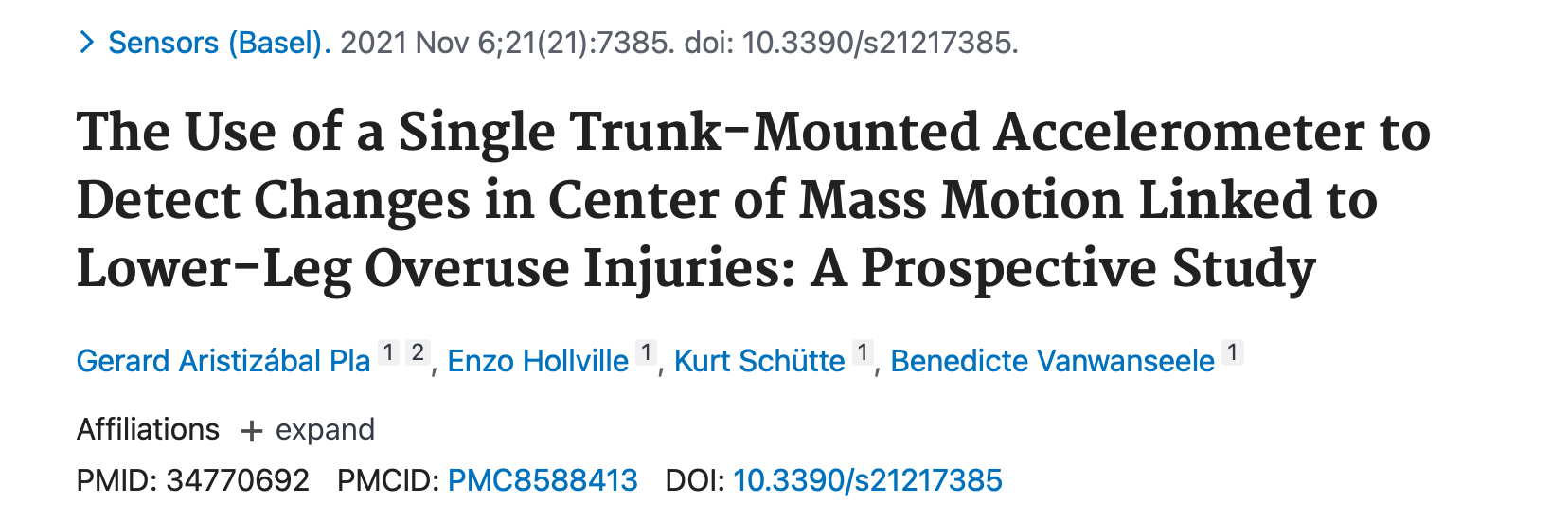
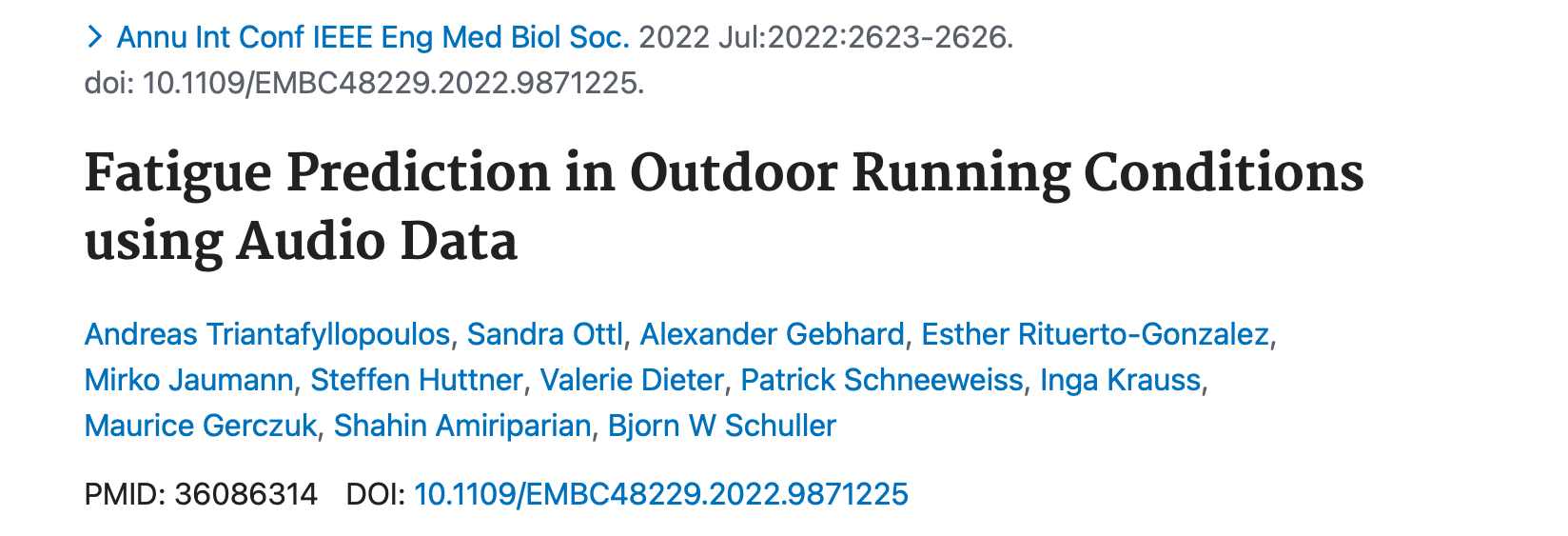
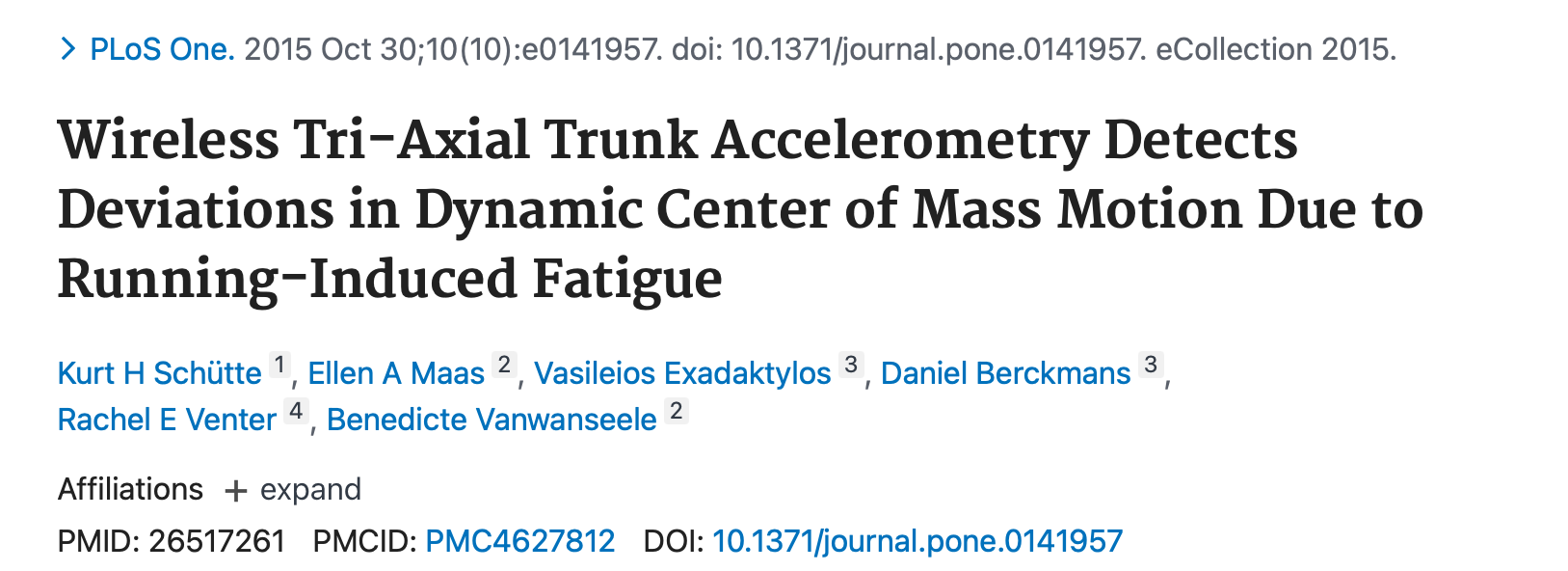
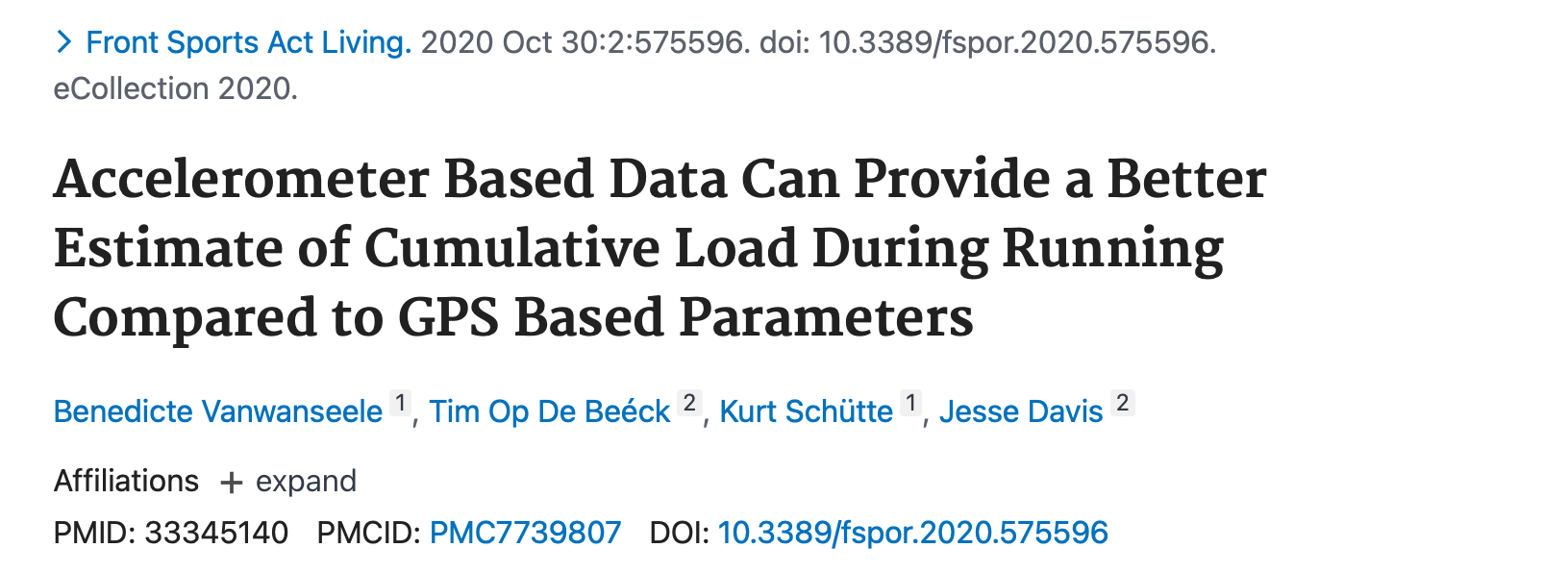
Peer Reviewed Research That Led To The Development Of Runeasi
- HARDWARE AND SOFTWARE
Data Collection
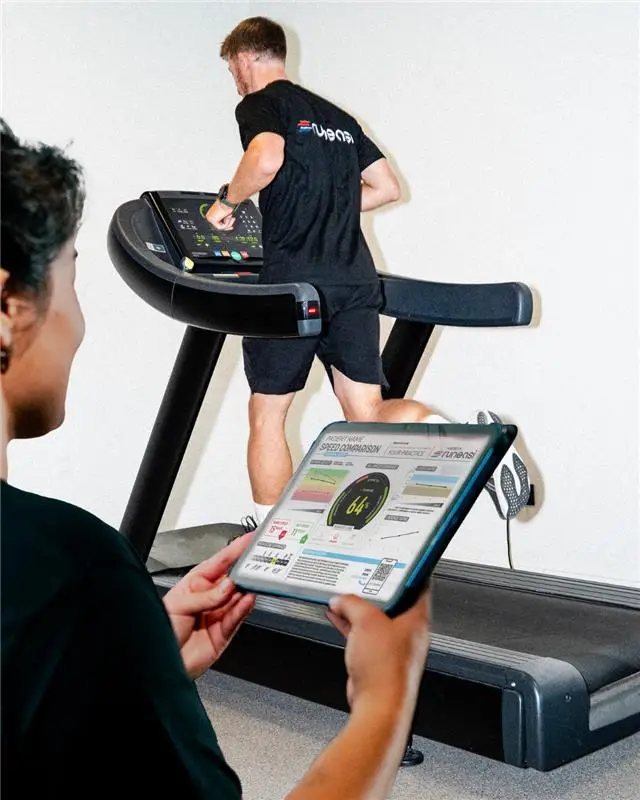
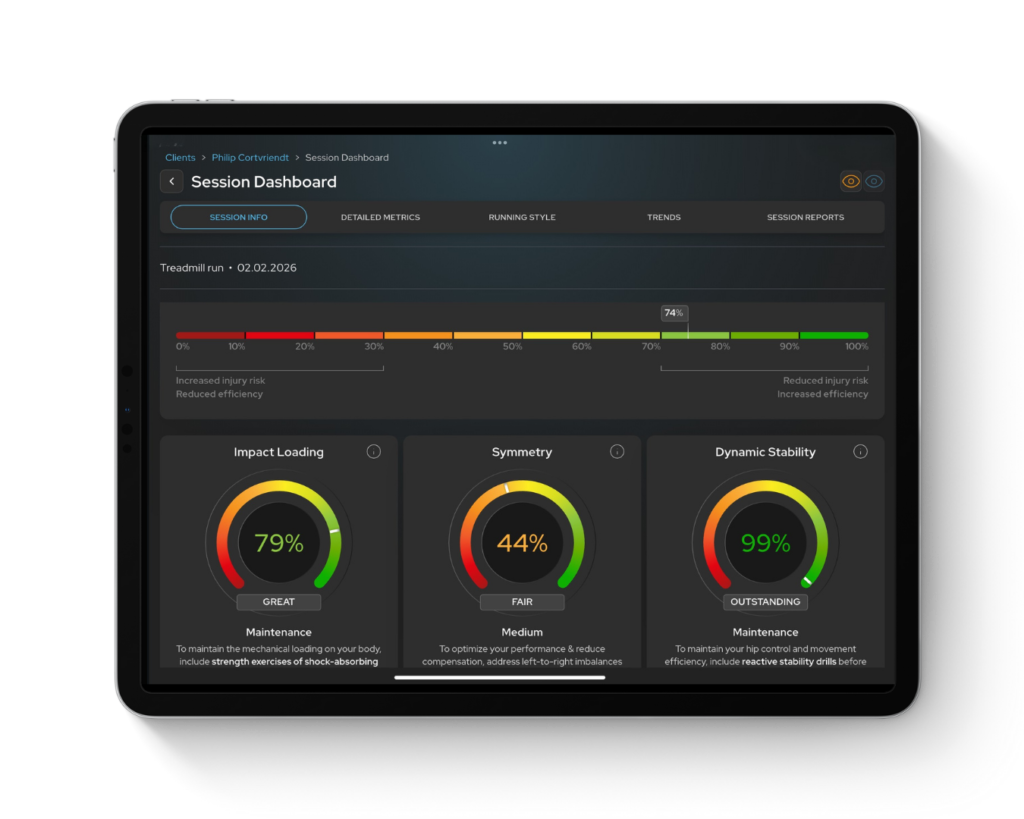
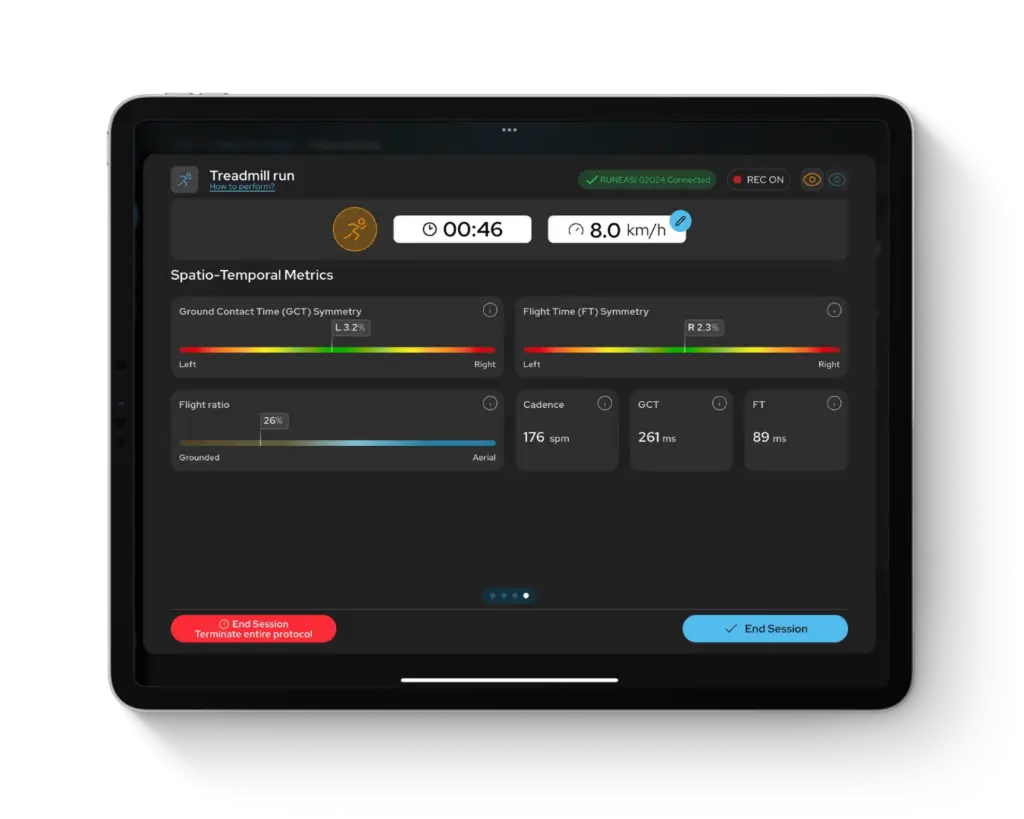
The sensor captures every step, jump, and subtle movement. Runeasi processes the sensor’s data using trained and validated algorithms to objectively measure power, reactivity, stability, subtle left-right asymmetries, and shock absorption in the lower limbs. Each metric can be viewed in the dashboard to provide individualized care. Together, they provide an overall running score that can easily be shared with clients.
Our Sensor
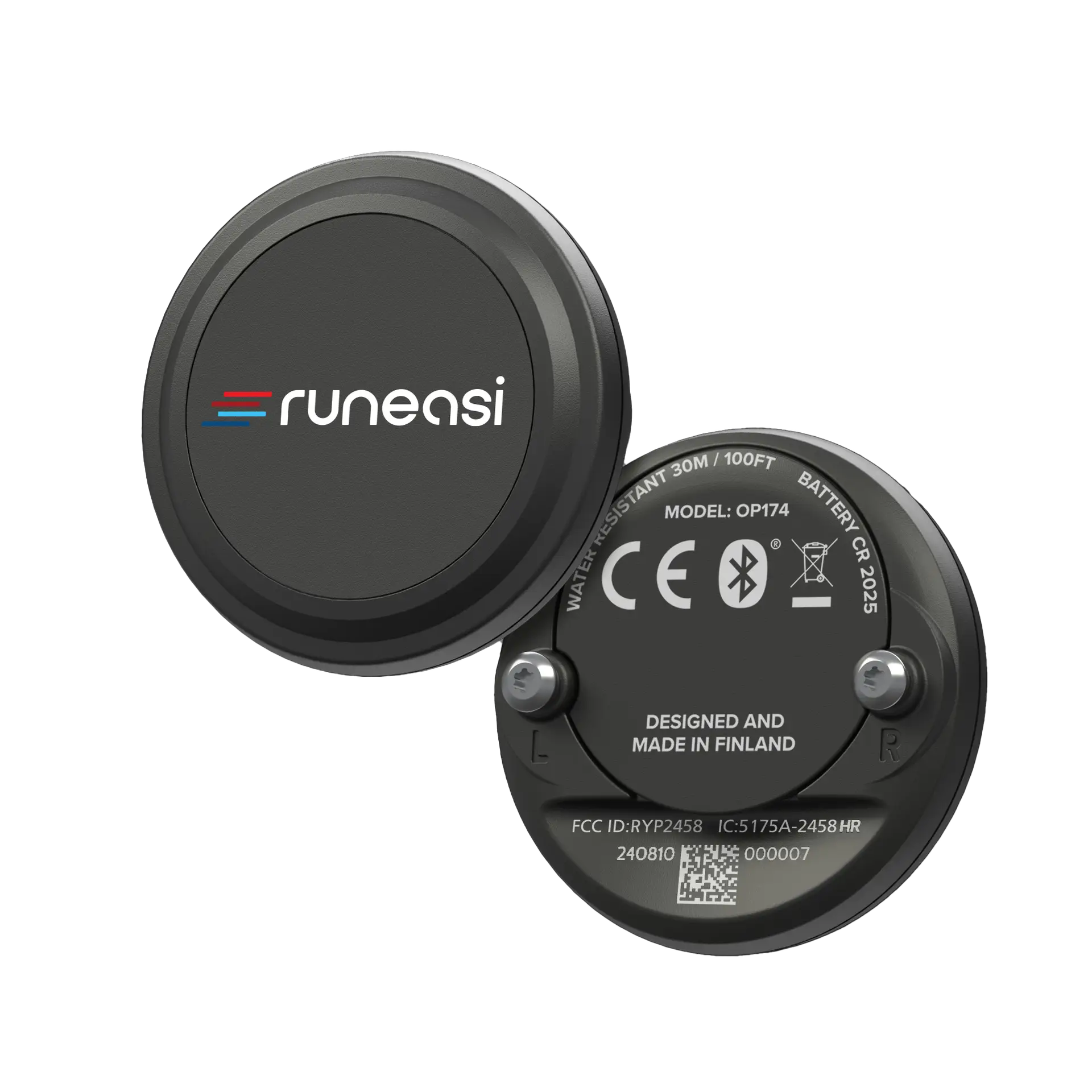
Runeasi uses a high-end IMU (Inertial Measurement Unit) that is comfortably worn on the lower back. It accurately captures the full range of motion of the body’s center of mass. From there, the system computes spatiotemporal and kinetic parameters, typically reserved for biomechanics labs. The sensor itself is slim, lightweight, waterproof, and features a wide sensing range (0–16G) with a high sampling frequency (833 Hz).
The Belt
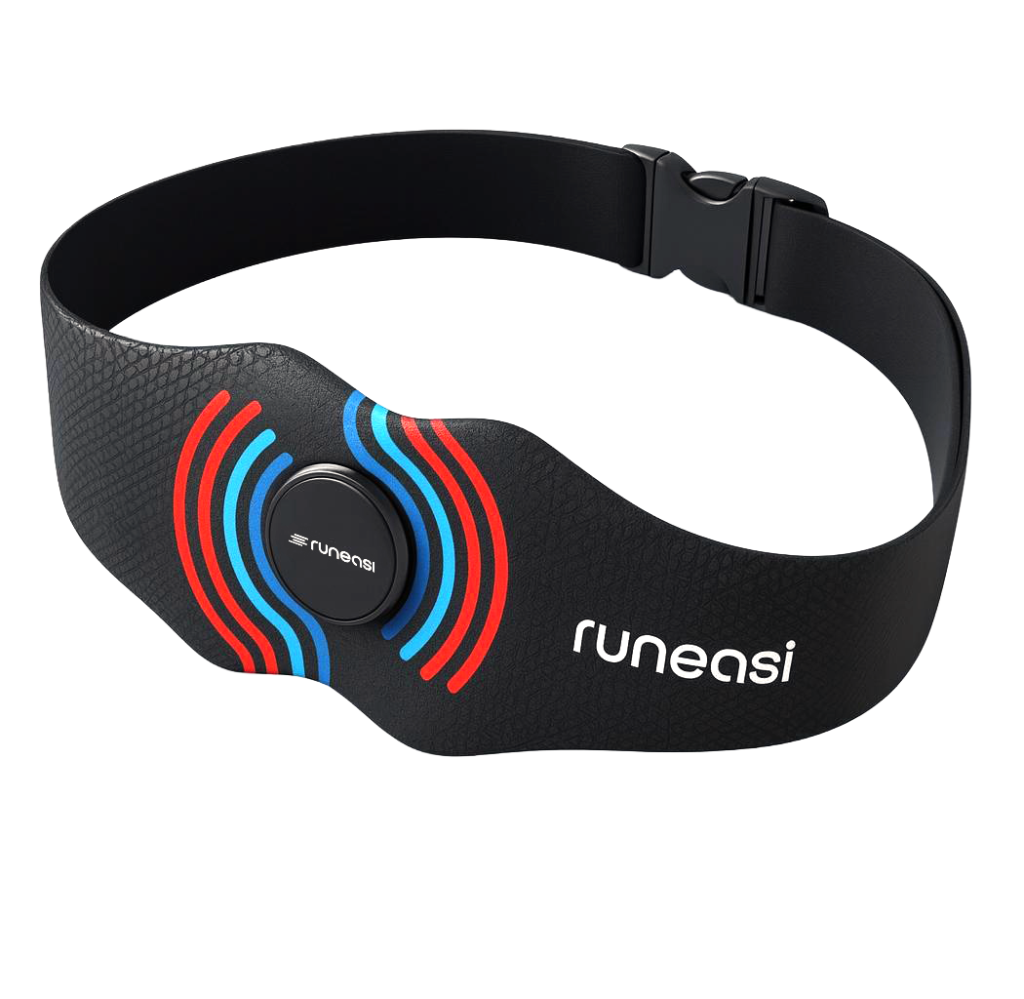
The Runeasi belt is hand-made using neoprene, a sweat-resistant material, and is specifically designed for high-impact movements like running and jumping. It is adjustable to fit all waistlines and features an engineered anti-slip grip. This ensures precise measurement of movement close to the body’s center of gravity while providing ultimate comfort.
Sensor Placement
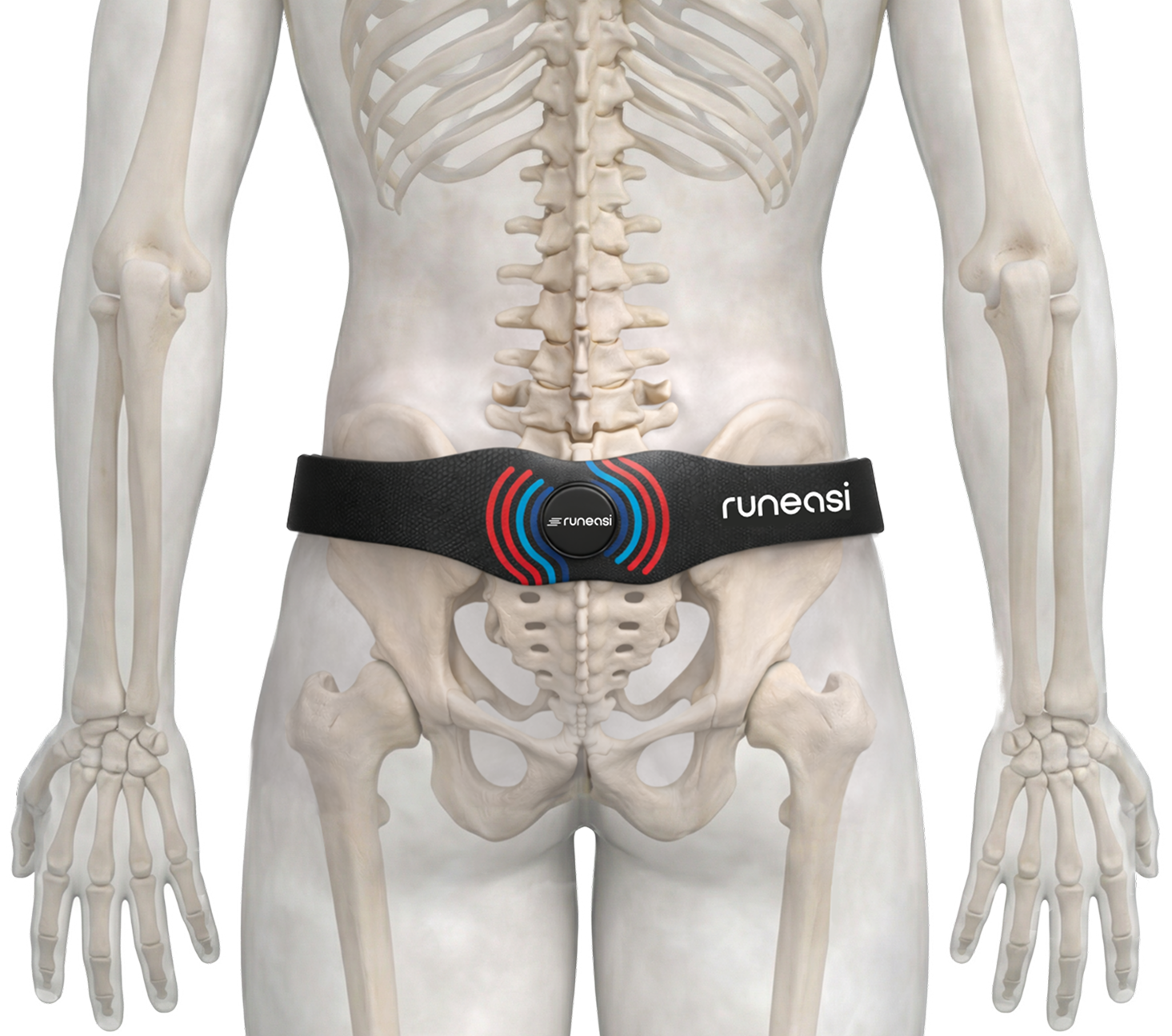
Runeasi’s sensor is placed on the sacrum (between the S2 and L5 vertebrae). Research shows that this location captures whole-body movement most accurately, as it is closest to the body’s center of mass.
Benchmarks
Runeasi’s scoring scale is based on data-driven benchmarks. Higher scores correspond to elite athletic performance, while lower scores reflect recreational or beginner levels. Lower scores could indicate injury or high-risk cases.
Each metric’s benchmark is specifically developed to account for its natural variability. This moves beyond the classical 10% asymmetry rule. As Bishop (2021) highlights, generic cut-offs are misleading and only metric-specific benchmarks provide feedback that is precise and relevant for professionals to act upon.
Artificial Intelligence
Runeasi employs AI algorithms to analyze high-quality biomechanical sensor data in real time, detecting gait events and loading patterns to provide insights into performance and injury risk.
Unlike popular large language models (LLMs) such as ChatGPT, which are trained on information available on the internet, our algorithms are trained and validated on gold-standard biomechanical data.
Training recommendations
Our training recommendations are developed by in-house experts, combining physiotherapy and coaching expertise with evidence-based practice. We don’t believe in testing without purpose. That’s why our recommendations are an integral part of our vision and the way we deliver clear, actionable reports to your clients.
Data protection & privacy
All user data is managed according to GDPR standards, ensuring it remains secure and private.