At the 2016 Olympics in Rio, we were introduced to the Nike Vapor Fly – the first carbon-fiber plate shoe. This innovative shoe sparked controversy and marked the start of a new generation of high-performance footwear. Other shoe companies took over 2 years to catch up and create similar designs. So, what sets the Vapor Fly apart from the regular training shoe we know? The shoe features a thin carbon-fiber plate in the midsole, which works with a lighter more responsive foam to create a spring-like effect at the toe-off, propelling the wearer forward. But, are the carbon-fiber plate shoe suitable for every runner? Can we do all our training sessions with them? Well, we tested the Hoka Carbon X 2 and Hoka Clifton 8 with an experienced triathlete during a 3-speed test on the running track.
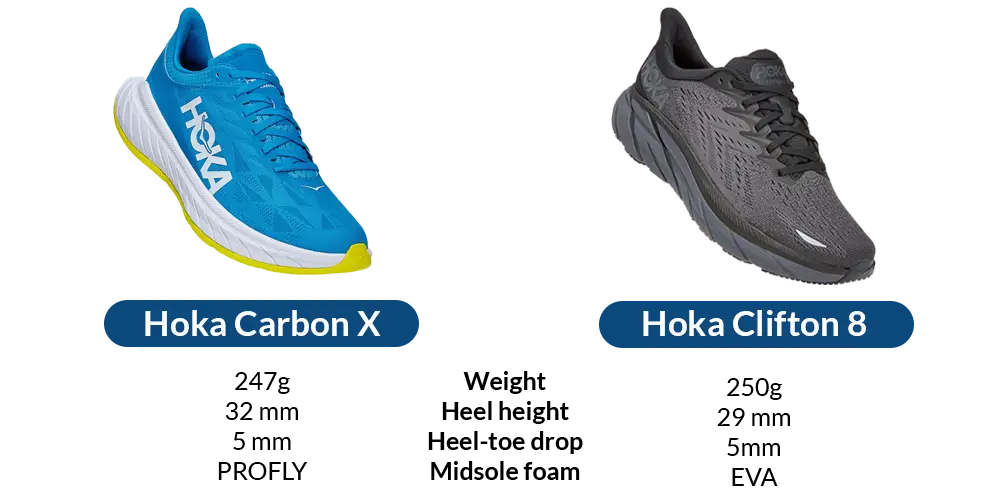
Before diving into the test results, it’s important to note the key distinctions between the two Hoka running shoes being compared. The main difference is that the Carbon X 2 features a carbon-fiber plate and utilizes PROFLY foam in the midsole, as opposed to the more common EVA foam. This is intended to enhance energy return during propulsion.
We will focus on the results of the impact loading, in which a significant difference between the two shoes was observed. Before delving into the specifics, it’s important to have a grasp of the parameters being measured: impact magnitude and impact duration. Impact magnitude refers to the peak vertical impact experienced by the pelvis upon foot strike, while impact duration is the time elapsed between initial contact and the peak impact. These measurements give us a good indication of how effectively the system (the runner and shoe together) absorbs the impact of running.

When analyzing the results of the impact magnitude, we found that the runner was able to maintain consistent impacts per step, however, the Carbon X performed the worst at 12km/h. The biggest difference between the two shoes was observed in the impact duration. At slower running speeds, the Clifton 8 excelled in shock absorption compared to the Carbon X 2. However, as the running speed increased, we observed a crossover point between 13.5 and 15km/h, where the Carbon X 2 performed better than the Clifton 8. It is worth noting that this crossover point aligns with the typical speed (15km/h) at which carbon-fiber-plated shoes are recommended to provide additional performance benefits.
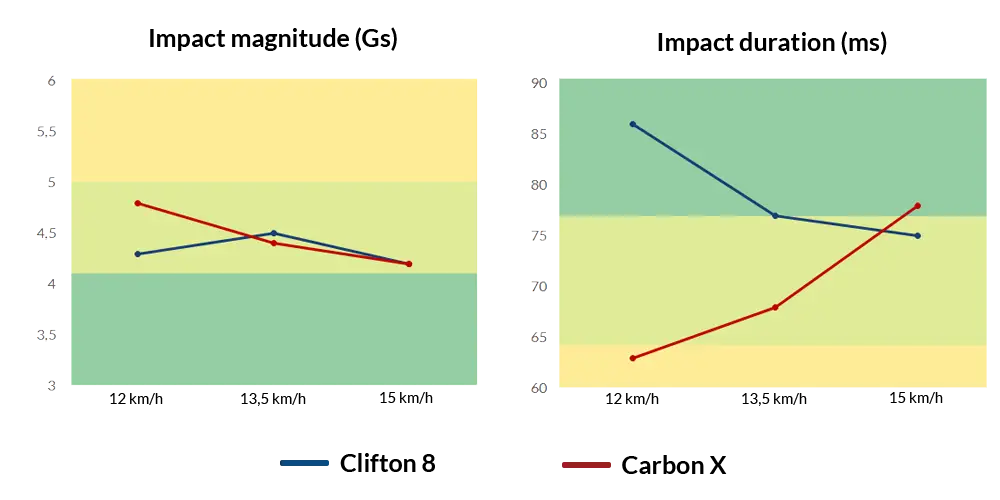
In conclusion, based on this case study, it appears that the triathlete in question would benefit most from using the Hoka Clifton 8 during slower running speeds of up to 15km/h. The Carbon X 2 may offer potential benefits at faster paces above 15km/h, which are typically encountered during interval training or racing. These findings align with the triathlete’s preference for using the Hoka Clifton 8 during slower training sessions.

Case insight provided by: Reinout Van Schuylenbergh, PhD
Reinout Van Schuylenbergh (°1973) holds a PhD in exercise physiology from the University of Leuven (Belgium), where he is still teaching Master students. He was previously the technical director of the Belgian Cycling Federation and Belgian Triathlon Federation for more than 20 years. He is a professional coach and sport consultant in cycling, trailrunning and triathlon. In his spare time, he’s participating in endurance & outdoor sports or playing the drums.