
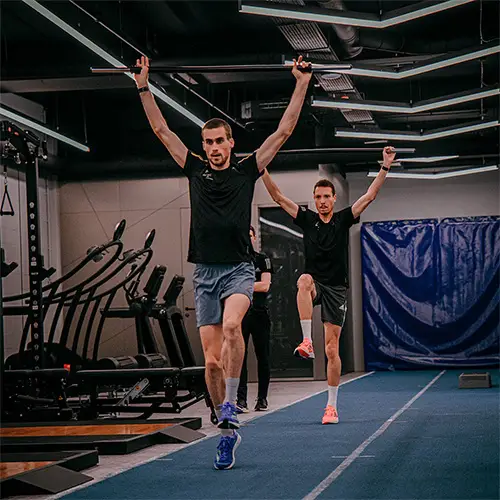
Over the past two decades, there has been a growing interest in core training to improve pelvic stability. However, it’s not a straightforward process to get the optimal transfer needed in running technique with the traditional core exercises we know. While these exercises certainly play a fundamental role in your training program, it’s important to understand that they are just one piece of the puzzle when it comes to achieving better stability. If you want to take your stability training to the next level, it’s time to go beyond the basics of core training and focus on a more holistic approach that takes into account all the factors that contribute to dynamic stability.
Throughout the dynamic stability training series, we will offer various posts on ways to optimize your transfer of dynamic stability training. In part 1, we’ll explain the most important determining factors that influence dynamic stability.
What is dynamic stability, and why is it important?

*Illustration of the side-to-side movement of COM during the stance phase of gait
Determining factors for an optimal dynamic stability
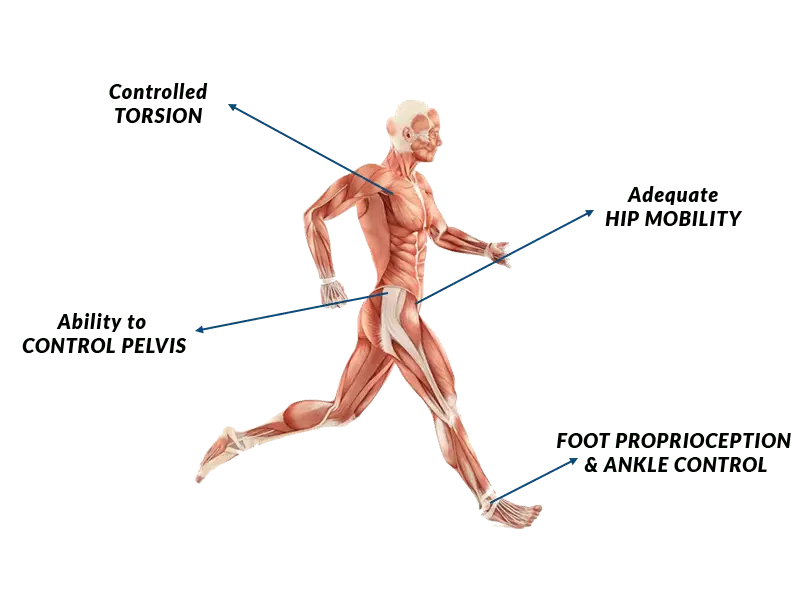
1. smooth body torsion
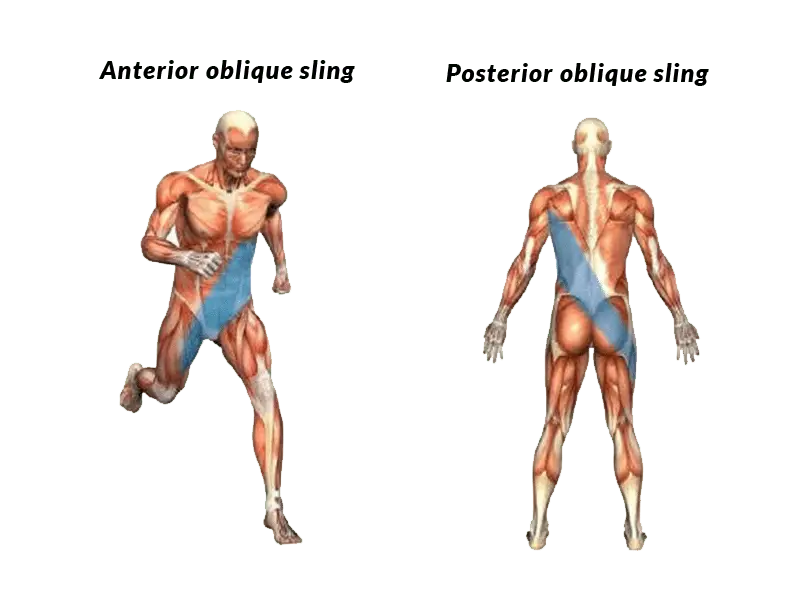
Poor/asymmetrical upper-body coordination can be a consequence of poor control of the pelvis. Don’t force it to change!
2. Adequate hip mobility
Do you notice a long ground contact time and a low cadence? Try to cue on smaller steps to improve dynamic stability
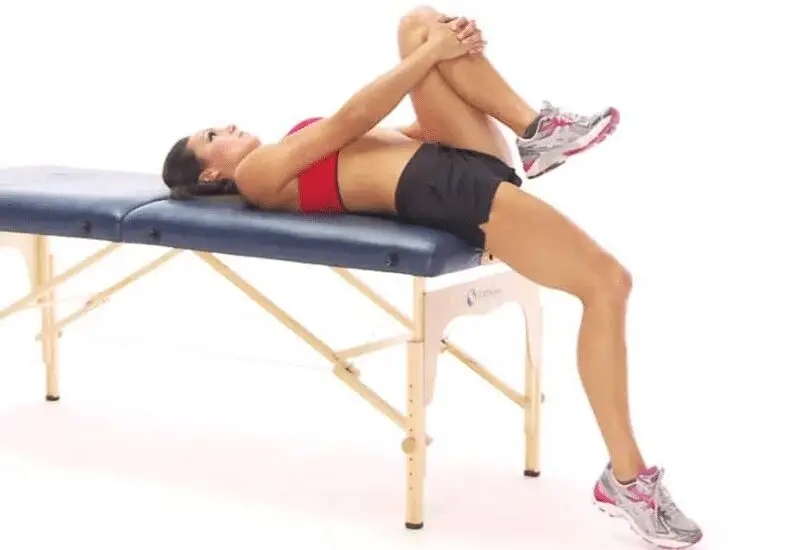
*Illustration of the ‘modified thomas test‘ to assess hip flexibility
3. Ability to control the pelvis
Be aware that injury can cause delayed muscle activation in stabilizing hip muscles (Willson et al. 2011)
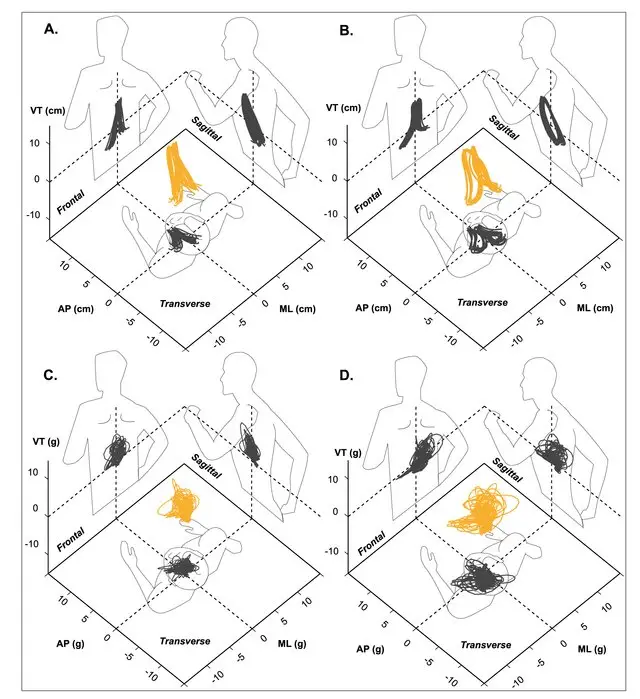
Maintaining good control of our pelvis becomes even more challenging when we are starting to fatigue. The images above show an example runner from the paper of Schutte et al., (2014) who moves his pelvis with more side-to-side displacements (Figure B fatigued vs. Figure A fresh) and with higher, less controlled, side-to-side accelerations (Figure D fatigued vs. Figure C fresh). This highlights the importance of being able to maintain good control of our pelvis throughout a longer or more intensive run minimize movement energy wastage.
4. Foot proprioception & ankle control
These days, we tend to wear more cushioned shoes. This can be beneficial to absorb the impact, but also reduce the ability to sense the ground beneath our feet, known as proprioception. Therefore it’s important to properly activate our stabilizing muscles before initial contact because we have limited time to react appropriately. Whether you run with a forefoot, midfoot, or rearfoot strike, actively dorsiflexing your foot is crucial to reducing slack in your calf muscles and engaging the anterior muscles of your ankle. This can improve the first shock absorption in the foot and ankle (really important!) and control the joints to improve the energy storage within the tendinous tissue for a better energy return.
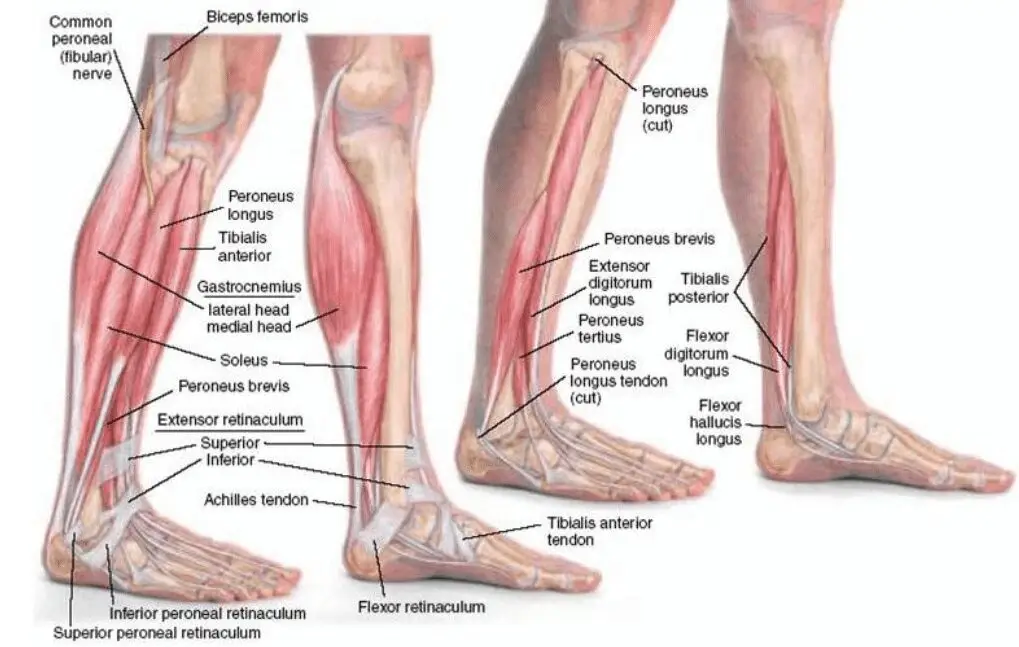
*Muscles around the foot & ankle are long and highly tendinous, which makes them suitable for energy storage and release while running.
Is there a framework to enhancing pelvic control in running?
While dynamic stability is an important biomechanical parameter to reduce injury risk and improve movement efficiency, several determining factors can influence this parameter. But, how can we now become better at propelling our CoM through training? In Part 2 we’ll propose a training framework to enhance dynamic stability in running.

Written by Philip Cortvriendt
Philip achieved a master’s degree in physiotherapy & rehabilitation sciences and has core expertise in the field of running, working with both recreational and elite runners. Philip has the unique role of educating Runeasi physiotherapists and helping them translate biomechanical insights into targeted strength and conditioning exercises- specifically on how they can improve their client care using scientifically validated biomechanical insights from our Runeasi analytics.